Chiller Systems: Cooling Large Facilities
What Is a Chiller and How It Works
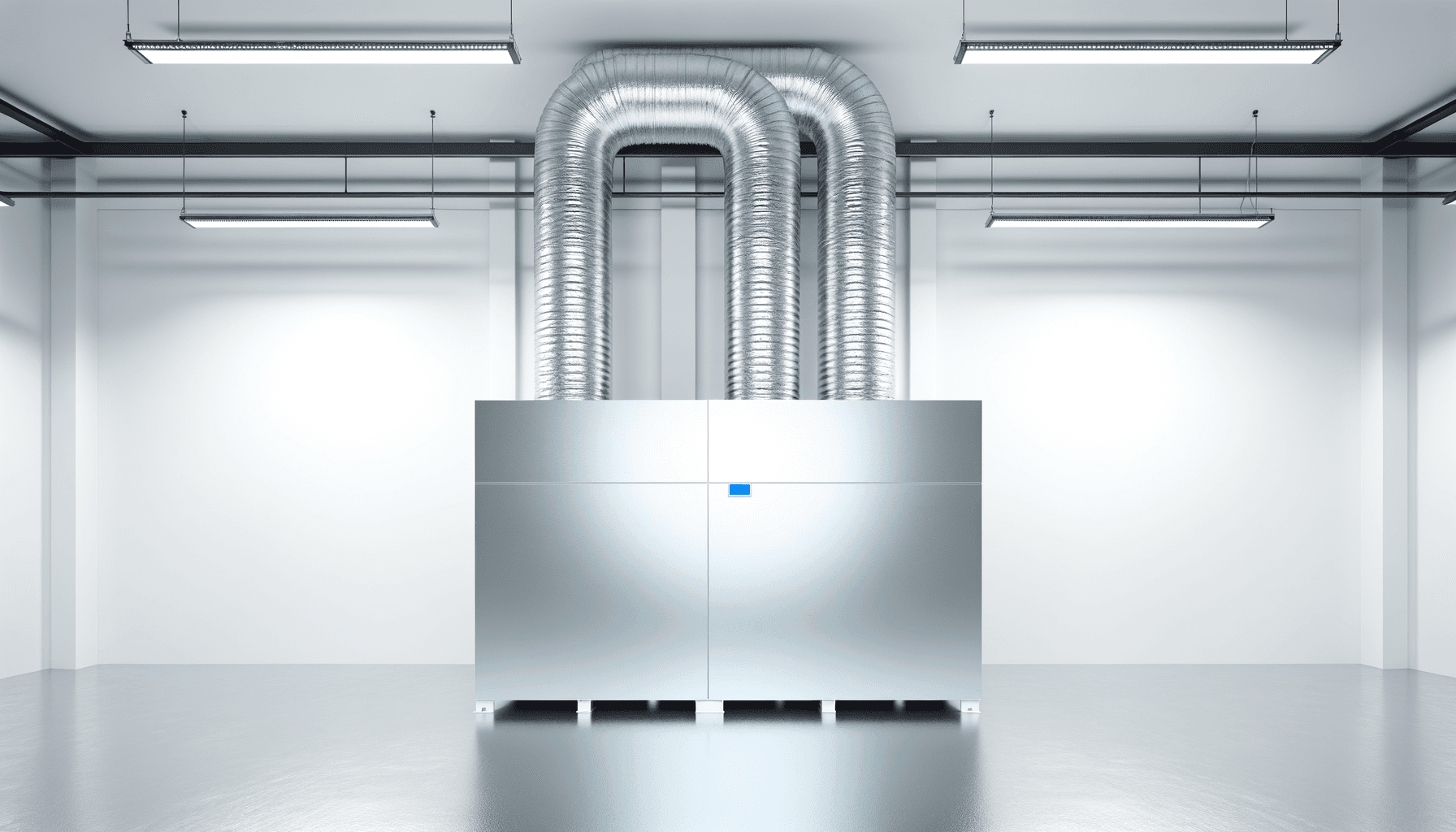
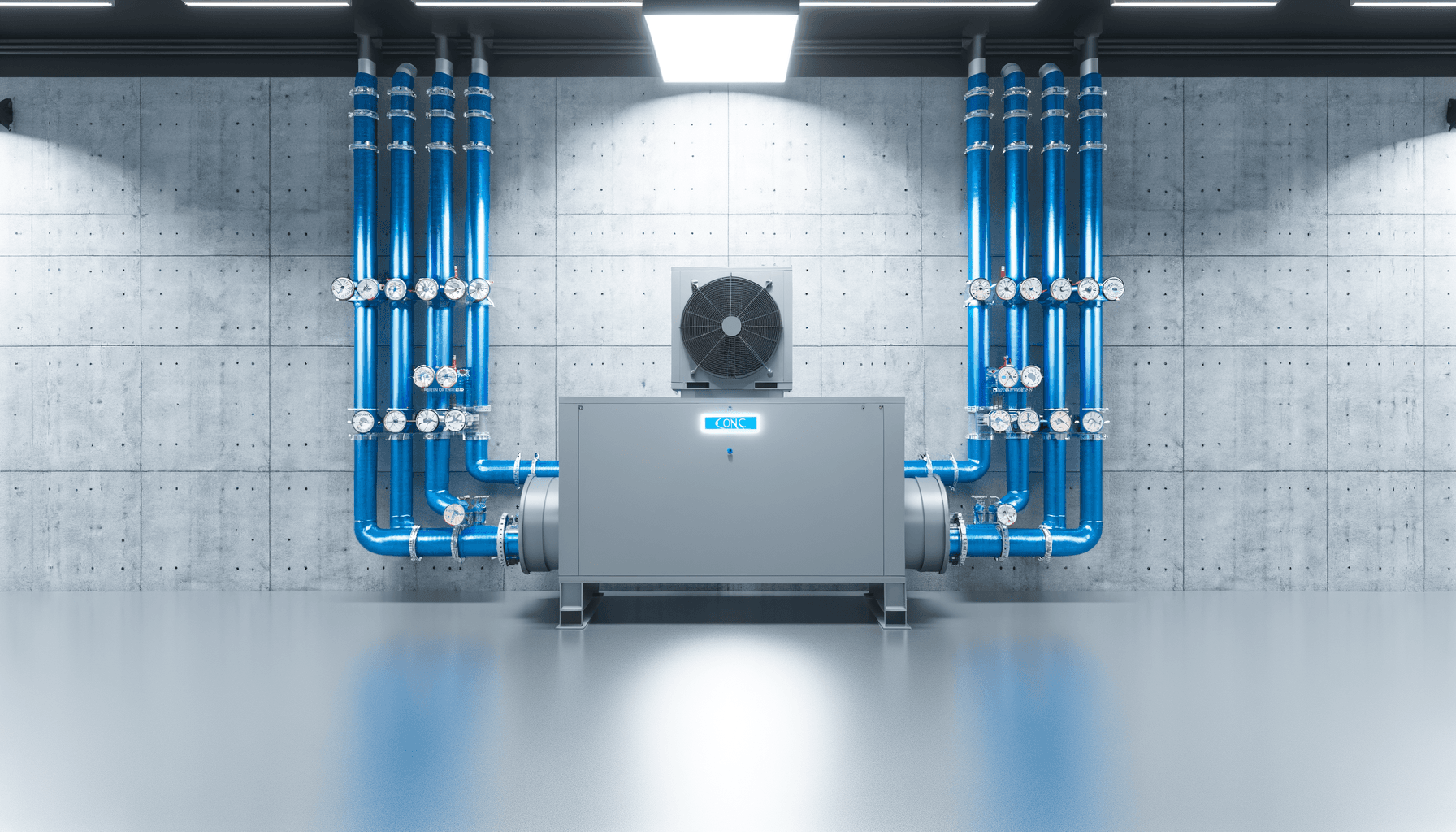
A chiller is an industrial refrigeration unit that cools water (or glycol solution) to 5–12°C. Chilled water circulates through pipes to fan coil units that cool room air. Unlike VRF where refrigerant flows through pipes, a chiller system uses water as the heat transfer medium. This is safer and allows cooling over greater distances.
Types of Chillers
Air-cooled — the condenser is cooled by outdoor air. Installed on rooftops or in yards. Simpler to install and maintain. Water-cooled — the condenser is cooled by water from a cooling tower. More compact and efficient but requires a tower and water treatment. Choice depends on capacity, installation space, and budget.
Fan Coil Units: Indoor Components
A fan coil is a heat exchanger with a fan through which cold water passes. Types: cassette (in ceiling), ducted (hidden), wall-mounted, floor-standing. One chiller can serve hundreds of fan coils. Each has an individual thermostat.
When a Chiller Is Better Than VRF
For areas over 1,000–1,500 sq. m, a chiller is often more cost-effective than VRF. Water is a safe heat transfer medium (refrigerant leaks are dangerous in large volumes). Water pipe length is virtually unlimited (vs 200 m for VRF). Chillers are easier to scale: add a fan coil, connect to the pipe.
Applications in Georgia
Typical chiller system applications in Georgia: shopping malls (East Point, Tbilisi Mall), hotels, hospitals, manufacturing complexes, data centers. For data centers, chillers operate 24/7/365, maintaining stable server room temperatures.
Cost and Maintenance
A 100 kW chiller (sufficient for 500–700 sq. m): from 30,000 GEL for equipment. Complete system with fan coils, piping, and installation: from 80,000–120,000 GEL. Maintenance: twice yearly (spring and fall) — heat exchanger cleaning, compressor check, refrigerant and antifreeze level control.