როგორ ავირჩიოთ კონდიციონერი ბინისთვის თბილისში
Tbilisi Climate and AC Requirements
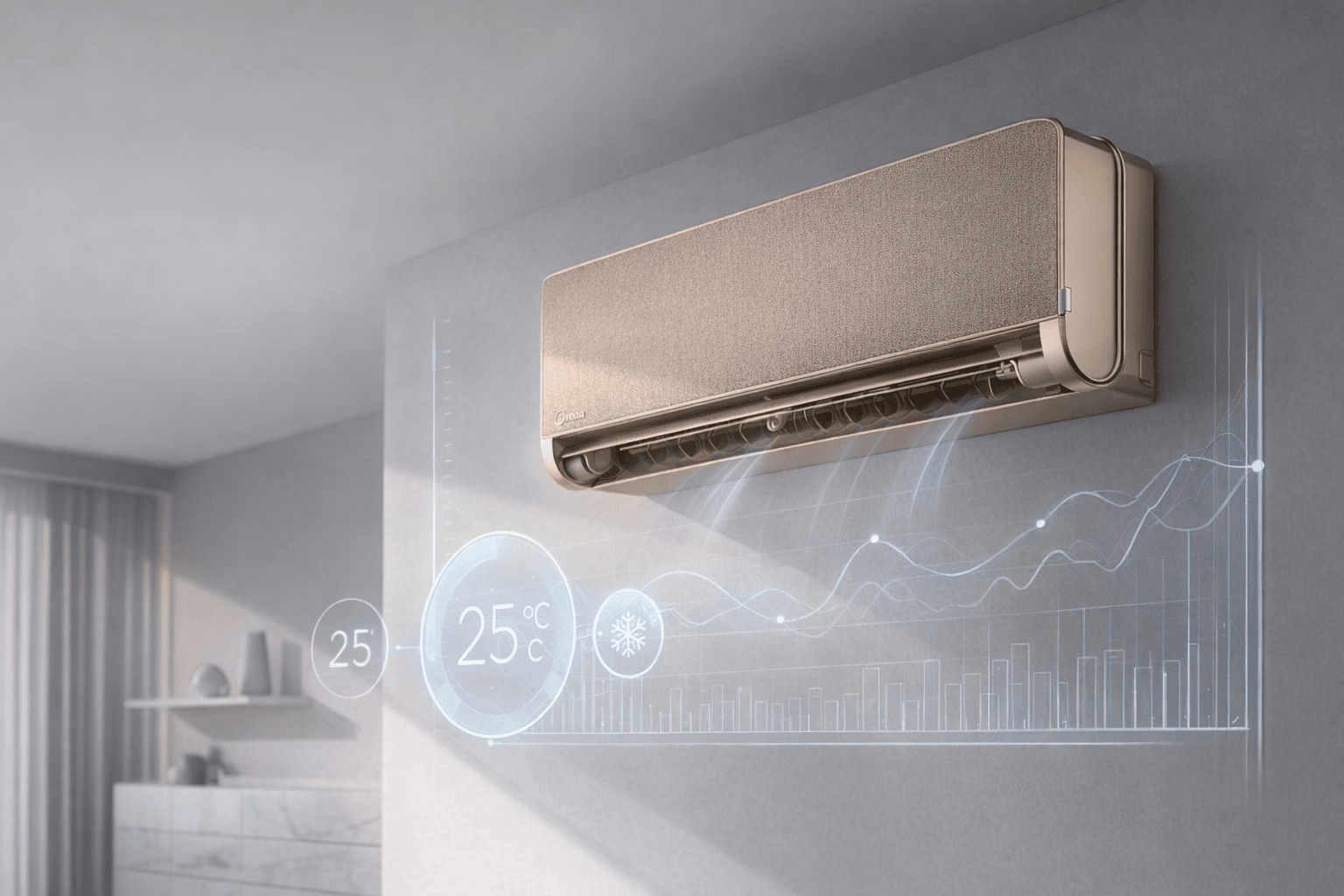
Summer temperatures in Tbilisi regularly reach 35–40 °C, and humidity in the Kura river valley makes it feel even hotter. This means your air conditioner runs 4–5 months per year almost non-stop. Key selection criteria: energy efficiency, compressor reliability, and proper capacity calculation.
Inverter vs On/Off: What's the Difference
An inverter AC smoothly adjusts compressor speed, maintaining the set temperature without harsh on/off cycles. This reduces energy consumption by 30–50% compared to On/Off models. At Georgian rates (≈ 0.25 GEL per kWh), an inverter saves 200–400 GEL per season.
BTU Calculation: Matching Power to Room Size
BTU (British Thermal Unit) is the standard cooling capacity measurement. Basic rule: 1 sq. m = 100 BTU. A 25 sq. m room needs a 9,000 BTU unit, 35 sq. m — 12,000 BTU. Factors that increase BTU needs: south-facing windows (+10–15%), panoramic glazing (+15–20%), top floor (+10%).
Energy Classes: What A++ Delivers
The difference between class A and A++ is 20–30% in energy consumption. Over 5 years, that's 500–800 GEL in savings.
Noise Level: Crucial for Apartments
A quality indoor unit operates at 20–28 dB in night mode — quieter than a whisper. Look at minimum-speed noise levels, not maximum capacity. For bedrooms, choose models with night mode.
Refrigerant: R32 vs R410A
R32 is a modern refrigerant with 3x lower global warming potential than R410A. It also requires less charge and provides higher COP. All new Midea models use R32.
Checklist: 5 Questions Before Buying
1. Room size and window orientation? 2. Inverter or On/Off? 3. Energy class? 4. Need Wi-Fi for remote control? 5. Professional installation — critical for warranty.