კონდიციონერის მონტაჟი: რა უნდა იცოდეთ დაყენებამდე
Pre-Installation Assessment
Before installation, a specialist evaluates: room layout, distance between indoor and outdoor units, facade accessibility, dedicated electrical line availability, and drainage options.
Unit Placement: Tbilisi Rules
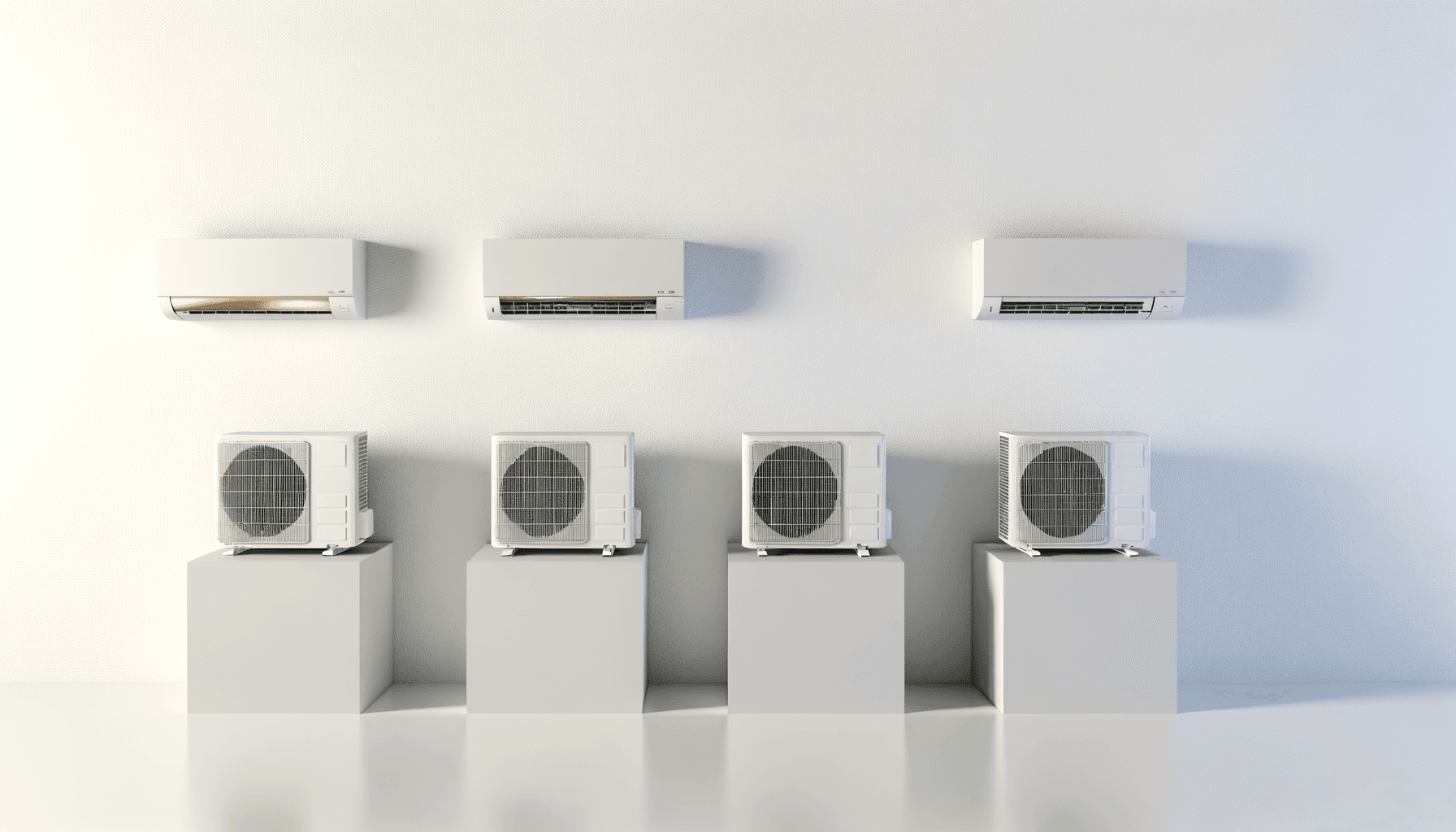
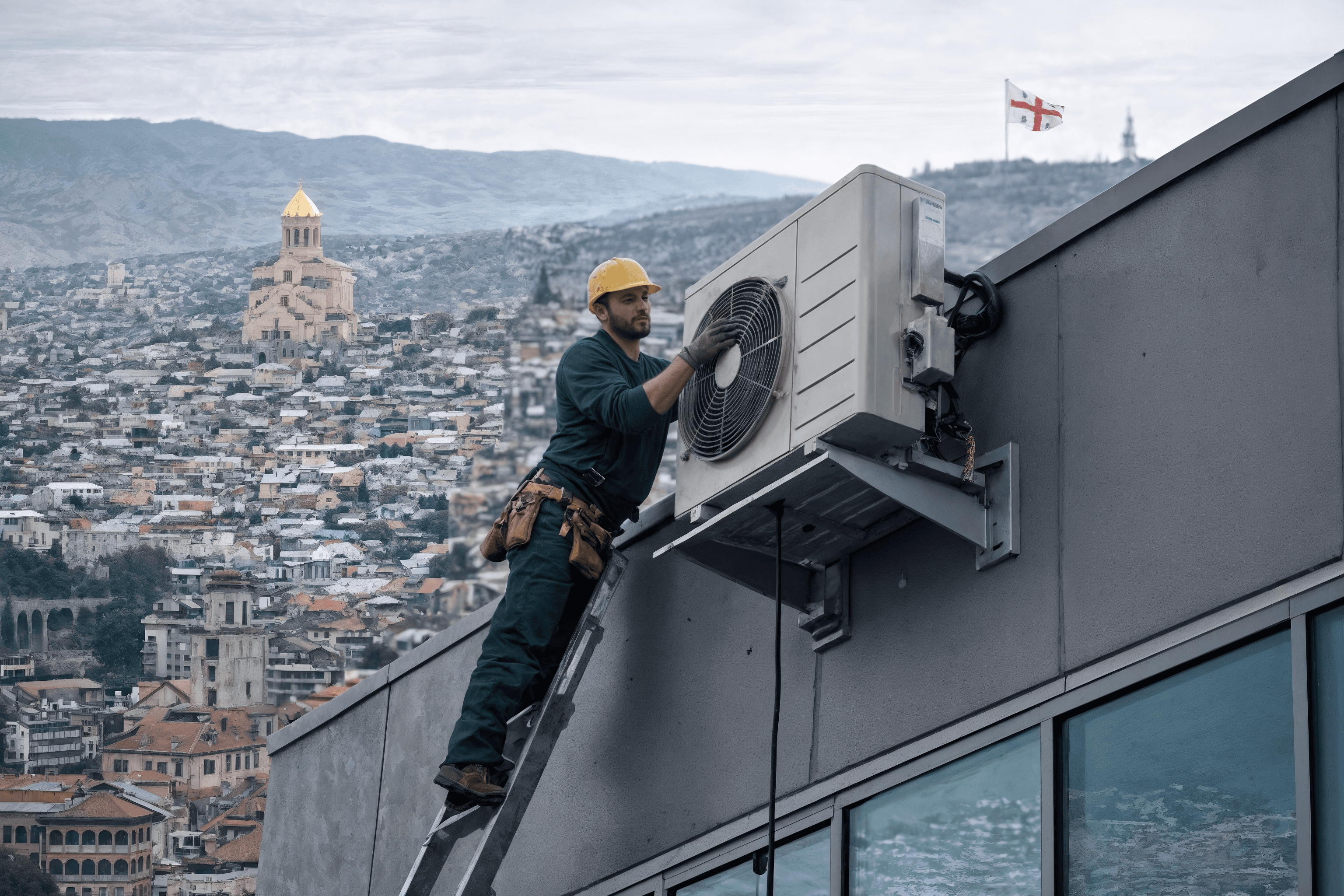
The indoor unit should be at least 15 cm from the ceiling and 10 cm from the wall for proper air circulation. The outdoor unit mounts on brackets with vibration and service access in mind. In Tbilisi, historic building regulations in the center must be considered.
Condensate Drainage
A split system generates 1–2 liters of condensate per hour at full load. The drain tube runs to the facade or into a sewer riser. The second option is preferred — no facade damage, no neighbor issues. Minimum slope: 3 mm per meter.
Electrical Requirements
A 9,000–12,000 BTU unit needs a dedicated 16A line with a circuit breaker. 18,000–24,000 BTU models need 25A. Never connect through an extension cord or share an outlet with other high-power appliances.
What Affects Installation Cost
Standard installation includes: one wall drilling, up to 3m line routing, connection, and vacuum. Cost increases: long line (>3m), 5th+ floor (requires lift or industrial climbing), concealed routing, additional drilling.
Common Installation Mistakes
1. Insufficient line length — causes vibration and noise. 2. Wrong drain slope — water pools or flows back. 3. No vacuum — moisture in system reduces efficiency by 20–30%. 4. Outdoor unit on enclosed balcony — overheating and emergency shutdown.
Commissioning and First Run
Post-installation checks: connection tightness, system pressure, all modes (cooling, heating, dehumidification), noise level, and drainage. Warranty is issued only after successful commissioning.