Multi-Split AC System for Apartments: Pros and Cons
What Is a Multi-Split System
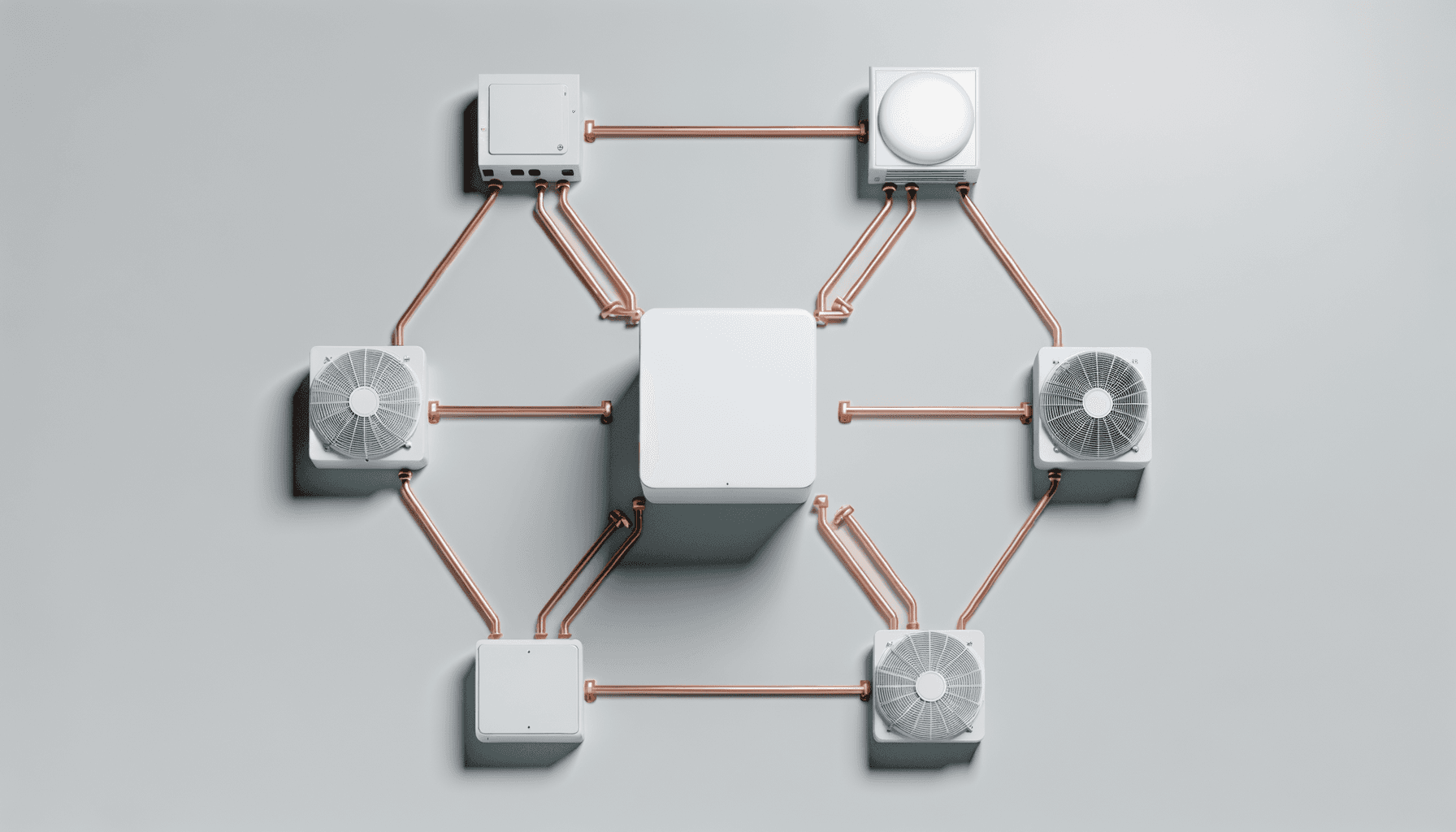
A multi-split system has one outdoor unit connected to 2–5 indoor units in different rooms. Each indoor unit has its own remote and operates independently. The outdoor unit is more powerful than a standard one.
Key Advantage: One Outdoor Unit
A typical Tbilisi apartment with 2–3 rooms needs 2–3 ACs. With separate split systems, that's 2–3 outdoor units on the facade. Multi-split solves this: one unit, one wall hole, clean facade. Especially relevant for new buildings with strict management requirements.
Installation Cost Savings
Installing one powerful outdoor unit is cheaper than installing two or three separate ones. Savings on brackets, wall drilling, and industrial climbing work (for high floors). However, copper lines from one outdoor unit to multiple rooms may be longer, partially offsetting savings.
Downside: Single Point of Failure
If the outdoor unit fails, the entire apartment loses cooling. With separate systems, a single unit failure doesn't affect others. This is the key disadvantage of multi-split.
Downside: Simultaneous Operation Limits
Not all multi-split models support simultaneous cooling and heating in different rooms. If you need cooling in one room and heating in another, verify 'Cool & Heat simultaneous' capability when choosing a model.
When Multi-Split Is Better
For 3+ rooms, facade restrictions on outdoor units, new construction (when lines can be routed in walls before finishing). A 2-to-1 system starts from 3,500 GEL, 3-to-1 — from 5,000 GEL including installation.
When Separate Split Systems Are Better
If rooms are far apart (line length >15m), if budget is limited (separate systems can be installed in stages), if independence matters — one failure doesn't affect others. For a 2-room apartment, two separate inverters are often more cost-effective.